Grow every muscle.
Move every lift.
Build your own week and watch it scored as you build: volume per muscle, fatigue per day, progression per lift. Set a goal, and you’re told when the plan drifts from it. Fix the week before you train it — not four weeks in.
Training for Hyrox, CrossFit, or selection? See all editions→
Runs in any browser — build it on the sofa, train from your phone, one history on every device. iPhone and Android apps are coming soon.
Training hard is the easy part. Knowing what to change isn’t.
- Am I doing enough for chest? Too much for shoulders? Every answer is a guess.
- Eight weeks into a programme with no way to tell if it was the right one.
- Stalled lifts, and no idea which lever to pull — more volume, more rest, or something else.
You did the hard part. The effort shouldn’t disappear into a black box.
The complete strength picture
Volume, recovery, intensity, progression — the whole depth of lifting scored on one screen, so you know what to change, not just what you did.
Catch the plateau before it costs you
A recovery model that flags the burnout coming on Wednesday, in time to change Saturday.
Know when to add — and when to stop
A muscle under target earns a set. A week over the line loses one. The chart says which, while there’s still time to act on it.
We train the way you do. We know the frustration of grinding for weeks with no clear signal it’s working — that’s the whole reason TPF exists.
British Army PTIs
Built by the people who programme physical training for soldiers — on tired bodies, in the field, to a deadline.
Peer-reviewed
Every weighting and curve traces back to published research — Schoenfeld, Ralston, Banister and more.
Web now, apps soon
Runs in any browser today, with one login and one training history on every device you sign in on. Native iPhone and Android apps are in build.
A real week, scored.
What would you change if you could see the week’s numbers before you trained it? This is our free beginner week, exactly as the app scores it.
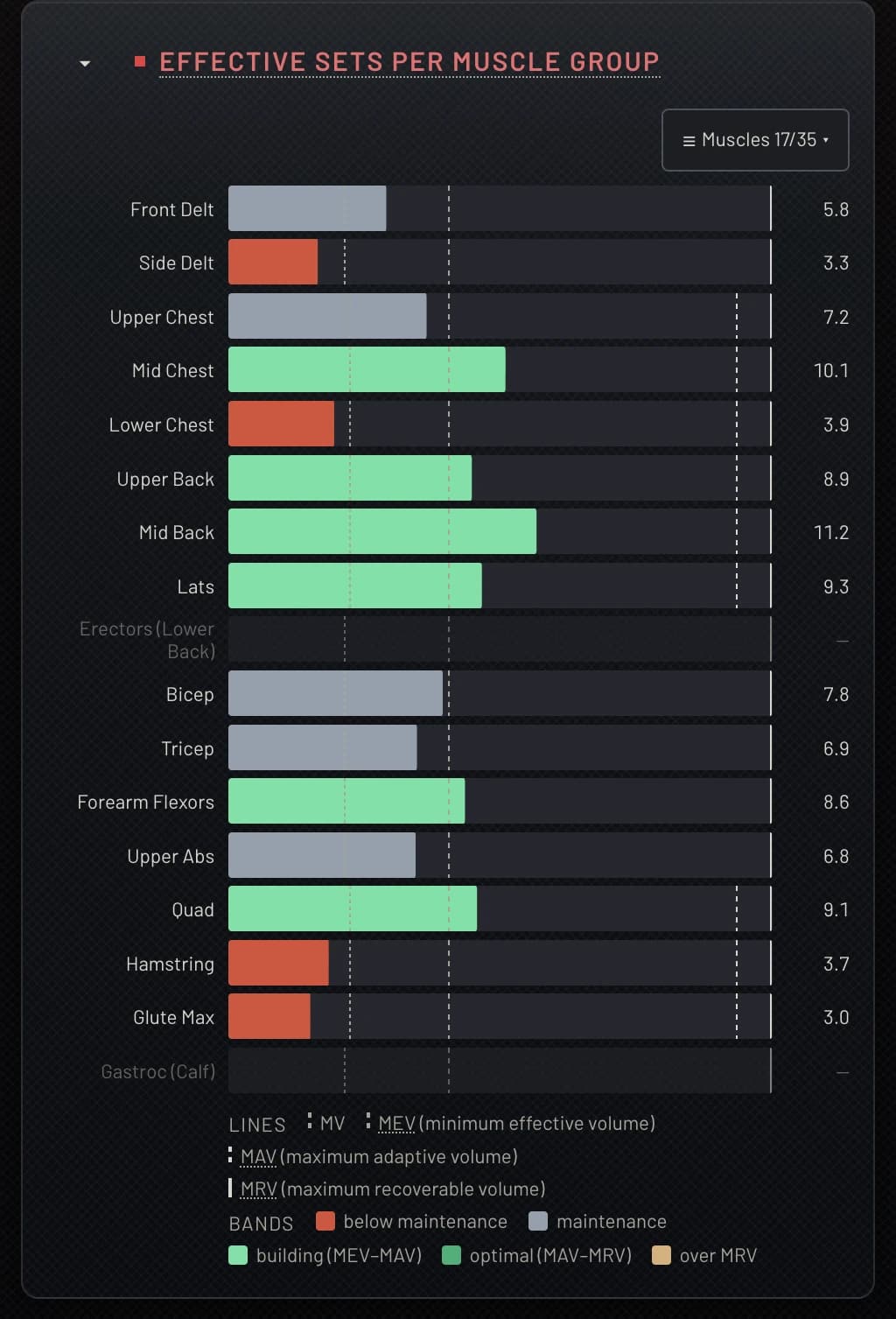
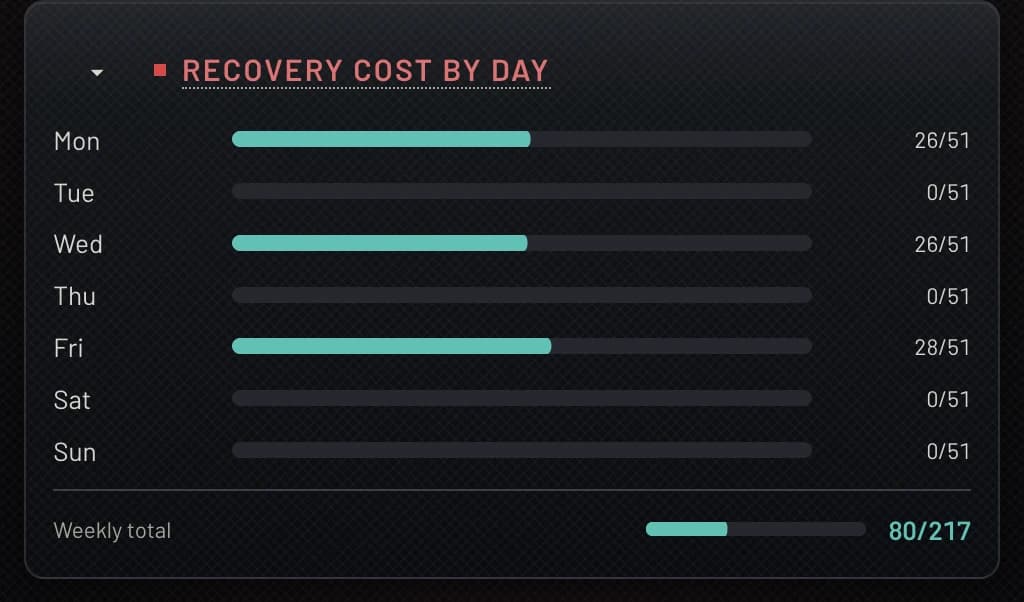
Run it yourself — no email, no card — and read your own numbers.
The questions it answers
“Am I doing enough for my hamstrings?”
“Could I add a set — or should I back off?”
“Why has my bench stalled?”
“More sets, or more rest?”
“Which muscle is lagging?”
Three steps. No surprises.
- 1
Set the goal, build the week
Name what you’re training for, then drag in your own split — or take a head start from 80+ templates. The analytics score it live as you build.
- 2
Read it, fix it, trust it
Under-trained muscle? Add a set. Fatigue over the line? Pull one back. And if the plan drifts from your goal, you’re told — before the week starts, not after.
- 3
Train it, track it, hit it
Log as you go and watch progress land against the goal you set. The progression engine sets next week’s numbers and calls the deload when it’s due.
From a blank week
to a bigger lift.
Five results, in the order you earn them — a plan you keep, growth you can measure, and strength that climbs block after block.
A plan you’ll actually stick to
TPF builds the week around your life.
Muscle is built by the weeks you complete, not the ones you plan — and plans die when they don’t fit your life. So TPF starts from yours: the days you can train, the kit you’ve got, the split you like. Take a template as a head start, then shape it in the builder until it’s a week you’ll genuinely keep.
A plan that fits your week is a plan that happens.
Growth on every muscle you care about
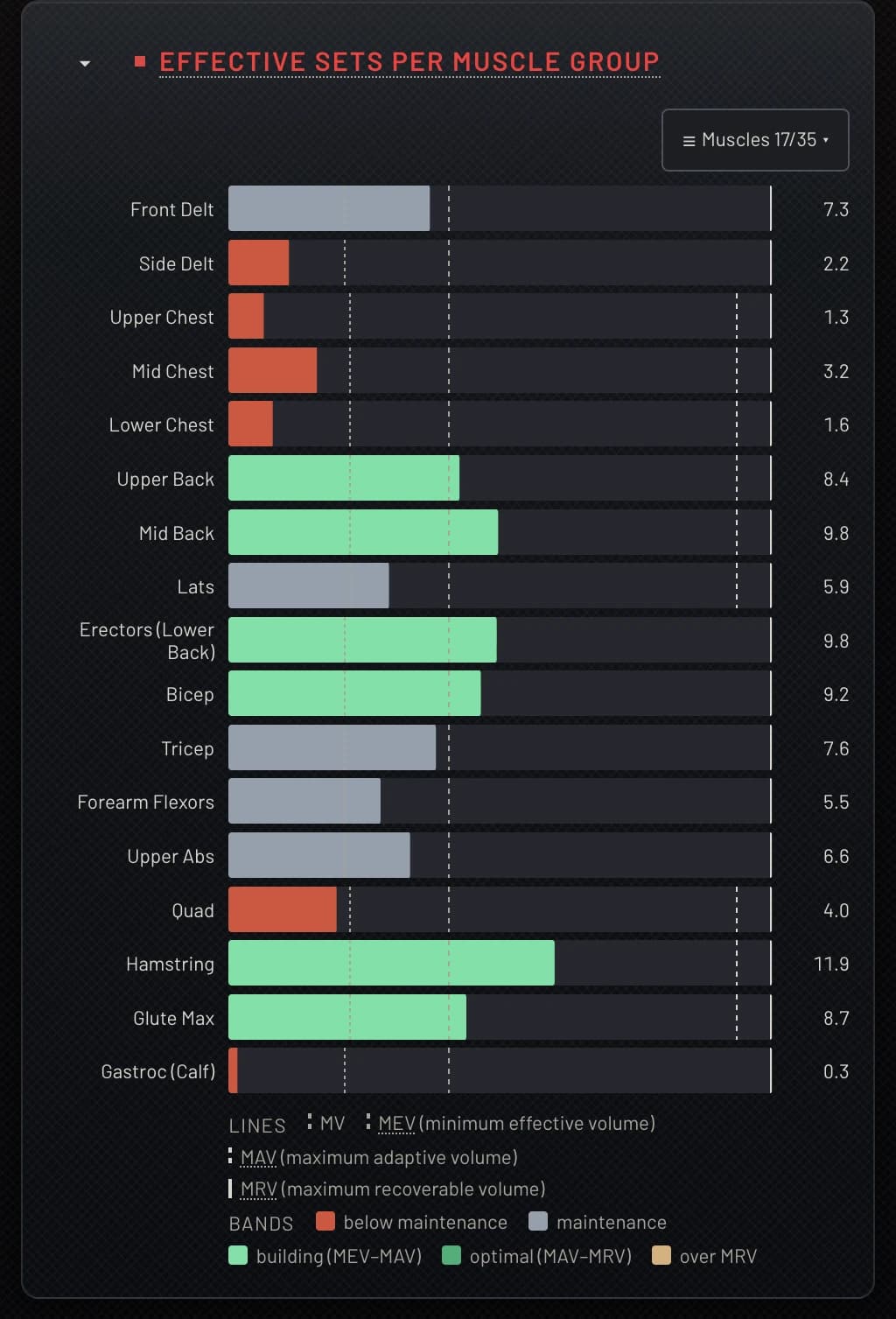
TPF scores the week as you build it.
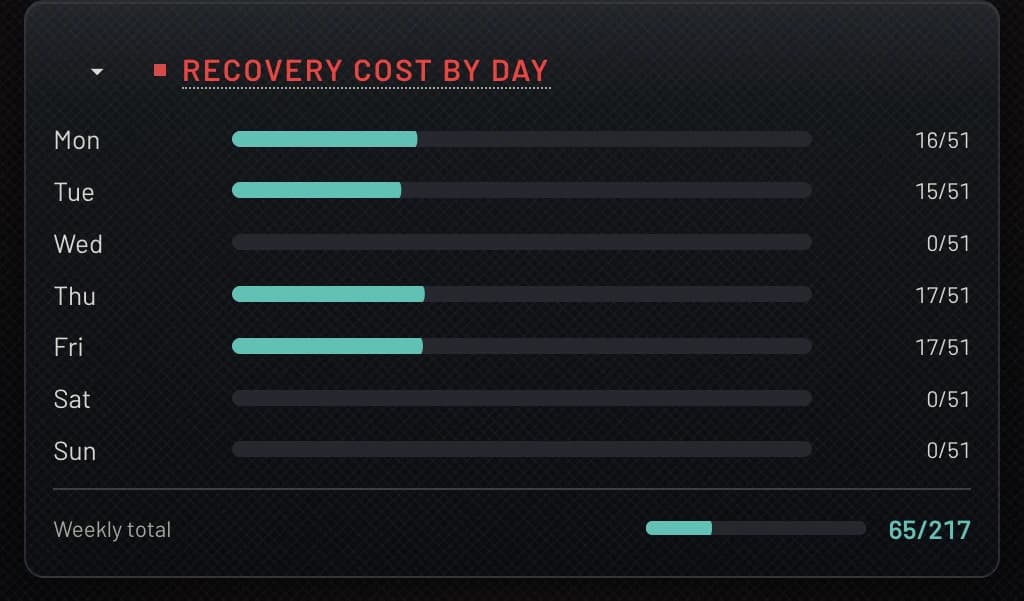
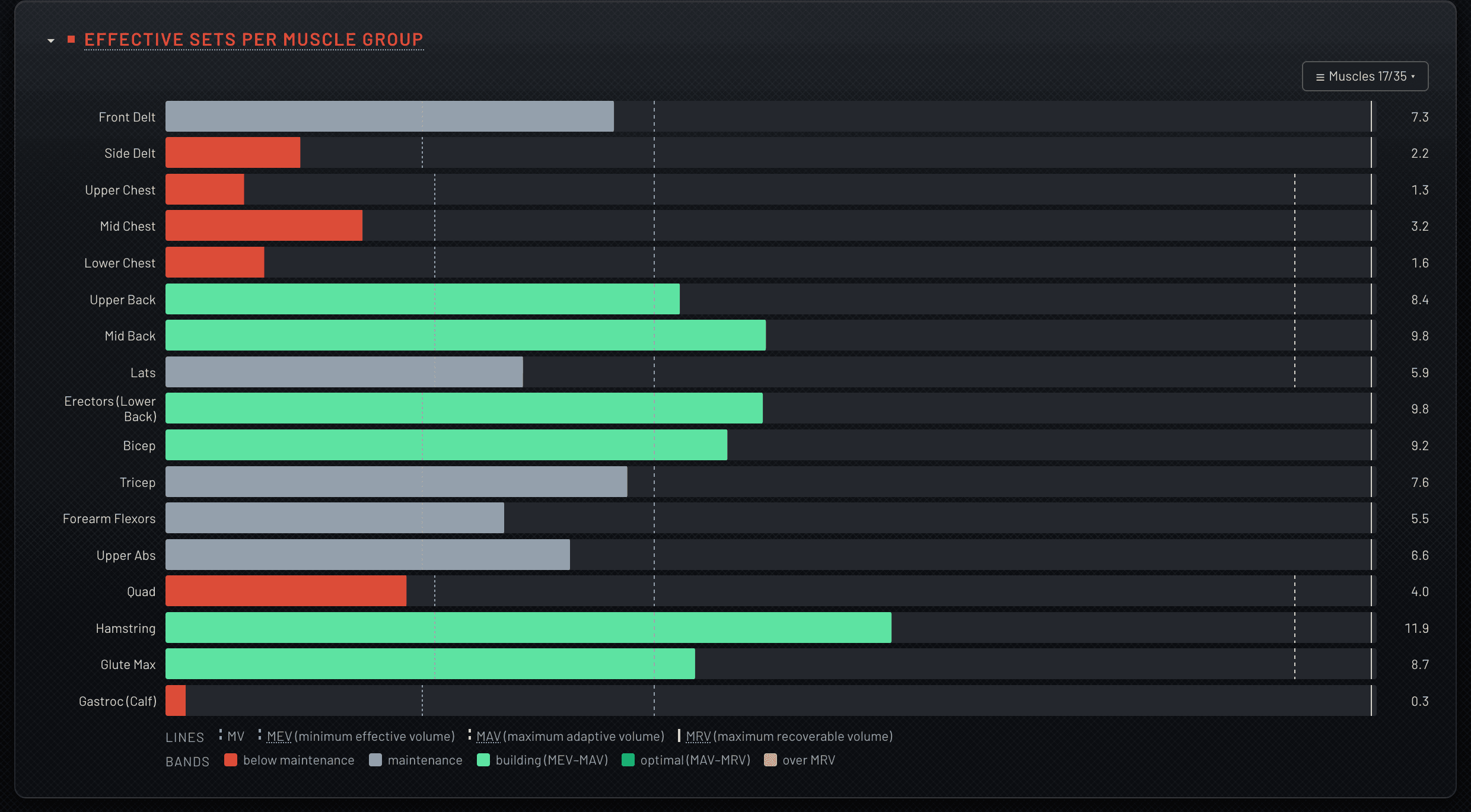
Size comes from giving each muscle enough — and not so much that you can’t recover. As you add exercises, TPF scores effective sets per muscle against target and stacks the fatigue day by day. The gap on hamstrings and the excess on shoulders are visible before you’ve trained a single session, so you fix the plan instead of repeating the mistake for a block.
Enough for every muscle. Not too much for any.
Sessions with zero guesswork
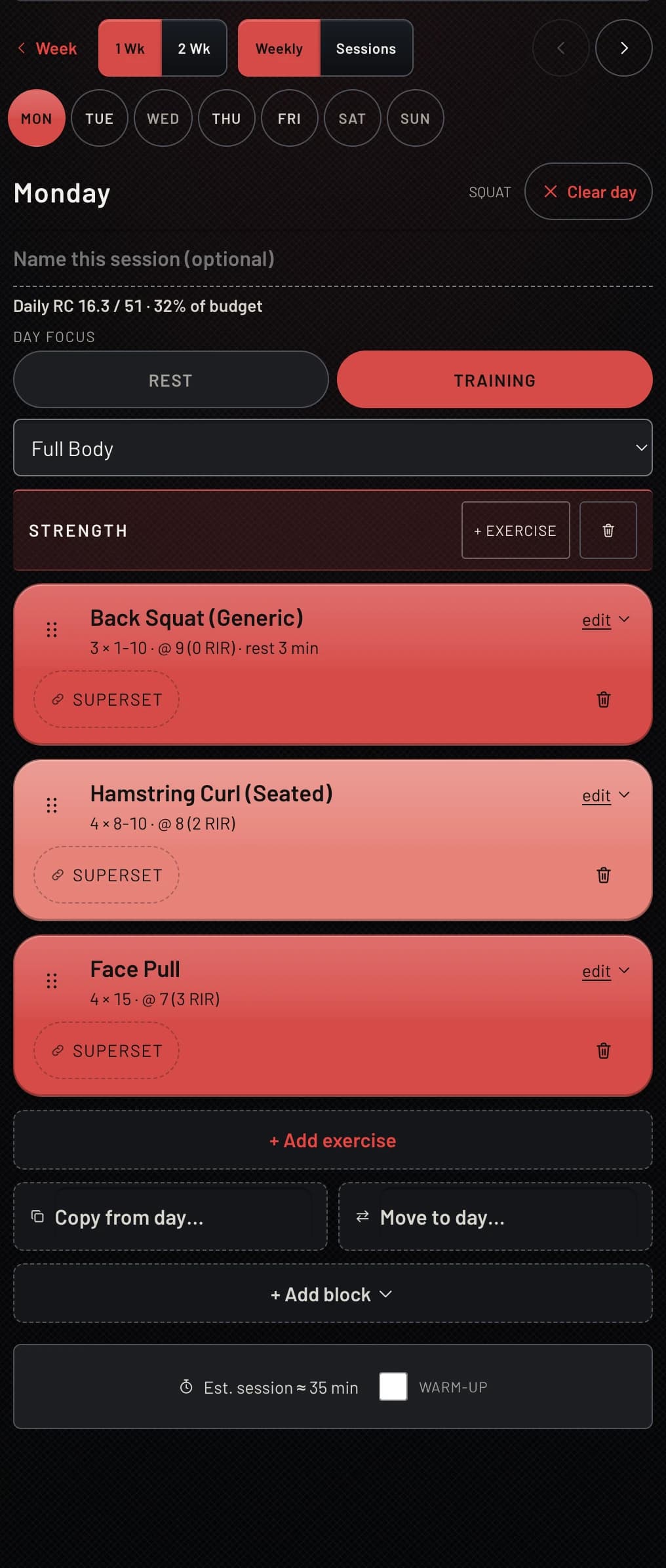
TPF turns the plan into tonight’s numbers.
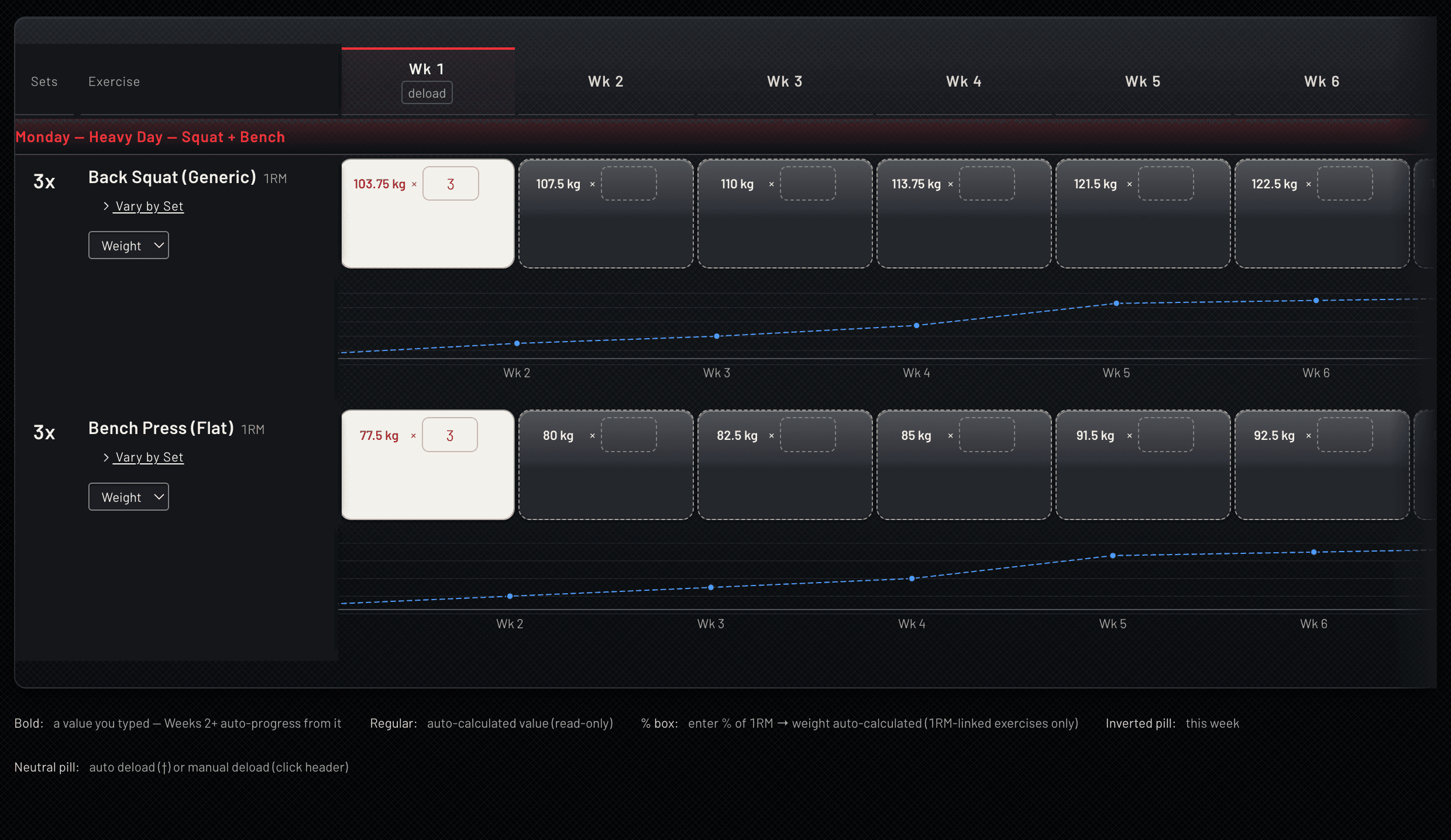
Progress needs hard sets, not hard decisions at the rack. Every session opens with the lift, the scheme and the weight already worked out from your 1RM — you turn up, lift what it says, tick it off, and the week updates behind you. The thinking happened when you built the plan.
Save the effort for the bar, not the maths.
Progress you can point to
TPF tracks every lift’s trend, block on block.
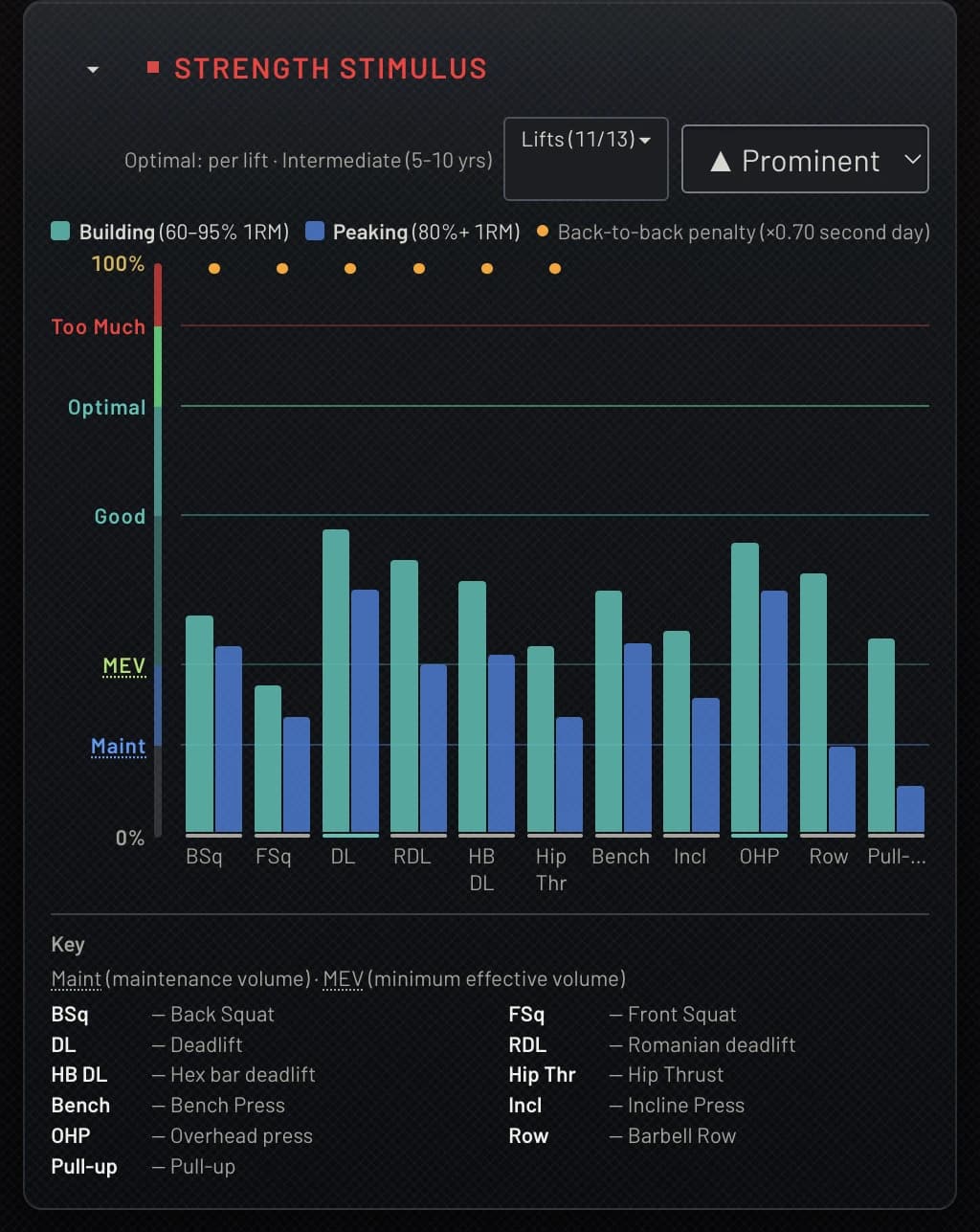
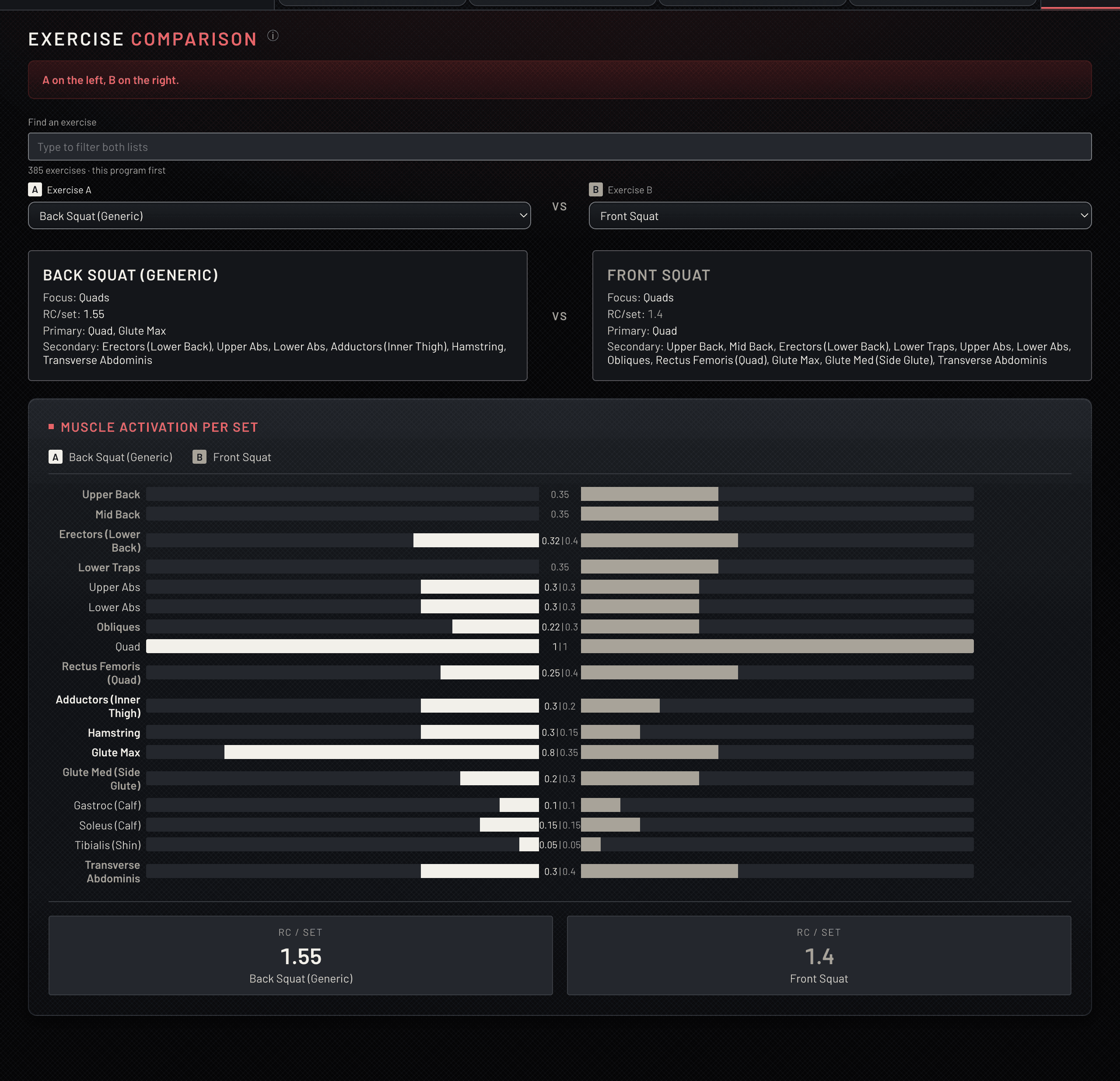
Getting stronger should be a fact you can check, not a feeling you hope is right. Estimated 1RM per lift, stimulus split into building and peaking, one exercise compared against another over months — so when the bench stalls you see it early, and you can tell whether the problem is the loading, the volume or the recovery.
Stronger every block — and you can see exactly why.
Months of progress, decided once
TPF plans blocks 4–16 weeks out from your 1RM.
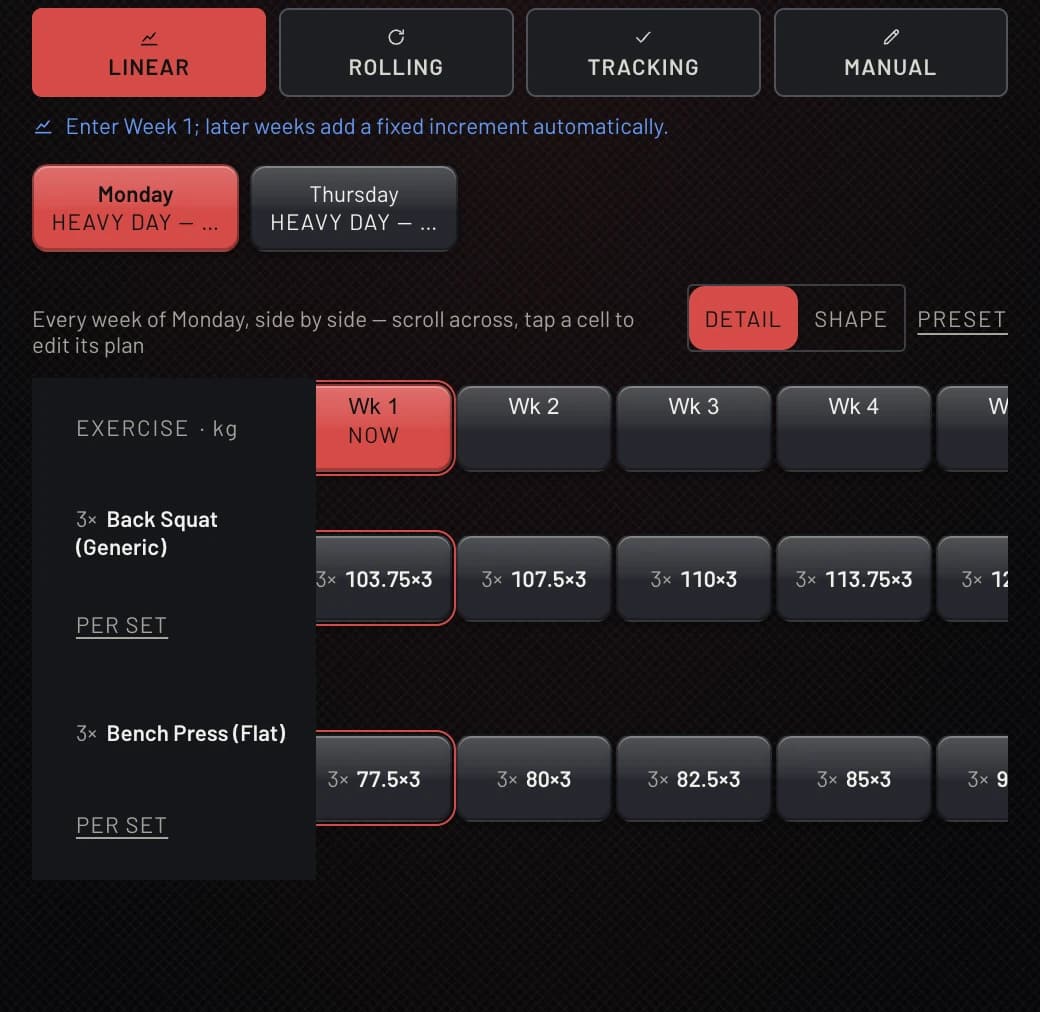
The lifters who keep progressing are the ones still following a plan in month three. Build a block once and TPF fills in the weights, percentages and progression curve — linear, wave, block periodisation or your own — then hands you the right numbers week after week until it’s time to test.
Decide once. Train for months.
One product, whichever screen you have on you.
Build the week at a desk where you can see every muscle at once, then take the same session into the gym on your phone.
The full product in any browser. Nothing to install, nothing to update, and one history that follows the login rather than the device.
The same screens in a phone browser, laid out for a handset. The iPhone and Android apps are still in build — you don’t need them to train off your phone today.
Most apps count your sets.
TPF scores all of it.
The most complete scoring engine on the market — every set weighted by what actually drives growth, every coefficient traceable to a paper. Not a logbook that just adds up reps.
| A set-counting app | TPF Lift | |
|---|---|---|
| Counts your sets | ||
| Adjusts for rep range | ||
| Adjusts for proximity to failure | ||
| Adjusts for rest interval | ||
| Counts diminishing returns as sets stack up | ||
| Knows each muscle’s minimum — and its ceiling (MEV / MRV) | ||
| Weighs every exercise by its real stimulus | ||
| Cites every coefficient |
Become the lifter who plans on evidence.
A plan you built on numbers, and progress you can point to — stronger every month, and you can see exactly why. Be your own expert.
Get the appNot ready? Start smaller. Take a free week of training, no email, no card — and see exactly what it scores.
Get a free training week
“Enough volume for chest this week?”